
When you’re shopping for a new air conditioner in Busselton or anywhere across South West WA, you’ll notice those colourful energy rating labels stuck to every unit. But what do all those stars actually mean? And more importantly, how can understanding energy star ratings help you pick a system that keeps you comfortable without sending your power bill through the roof?
Busselton Air has been helping South West families choose energy-efficient air conditioning since 1994, so we know a thing or two about what those labels really tell you.
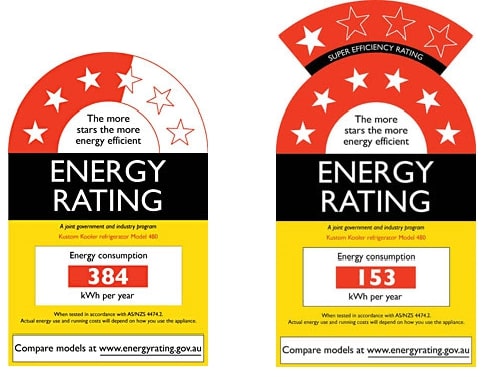
Image source: 2025 energyrating.gov.au
How Energy Star Ratings Work
Energy star ratings measure how efficiently your air conditioner turns electricity into cooling power. In Australia, most appliances are rated between 1 and 6 stars on the standard Energy Rating Label, though super-efficient models can display up to 10 stars. The more stars, the less electricity your unit uses to deliver the same amount of cooling.
Here’s the simple truth: each extra star typically cuts annual energy consumption by 15 to 25 percent for air conditioners of similar size. That’s not just better for the environment, it’s real money back in your pocket every quarter when the Synergy bill arrives.
The rating itself comes from a formula that divides the unit’s cooling capacity by the power it draws. Split systems and ducted air conditioning with inverter technology and modern R32 refrigerant tend to score higher because they adjust their output to match the room temperature rather than cycling on and off like older fixed-speed models.
Ready to upgrade to a more energy-efficient system? Get in touch with our Busselton team for a free quote.
Ready to upgrade to a more energy-efficient system? Get in touch with our Busselton team for a free quote.
Understanding the Zoned Energy Rating Label
Since April 2020, all single-phase, non-ducted split system air conditioners in Australia must carry a Zoned Energy Rating Label, or ZERL. This updated label shows separate star ratings for three climate zones: Hot (northern Australia), Average (central regions) and Cold (southern areas).
Why does this matter if you live in Busselton? Because Western Australia’s South West sits squarely in the Hot zone. That means when you’re comparing units, you should focus on the Hot zone star rating and the annual kilowatt-hour figure for cooling. Those numbers reflect how your air conditioner will actually perform during our long, dry summers when temperatures regularly push past 30 degrees Celsius.
The Zoned label also includes estimated annual energy usage for both heating and cooling modes, plus information about smart features like Wi-Fi control and demand response capability. If you’re considering a Daikin air conditioner with iZone integration, these smart features can help you fine-tune your energy consumption even further.
What a 6-Star Energy Rating Really Means
A 6-star energy rating on an air conditioner means the unit meets strict efficiency standards set by Australian and New Zealand regulations. For context, a 5kW split system with 6 stars in the Hot zone typically uses around 550 kilowatt-hours per year for cooling. Compare that to an older 3-star unit of the same size, which might burn through 850 kWh annually, and you’re looking at savings of roughly $99 each year based on current Synergy tariffs in the South West.
Over the 10 to 15-year lifespan of a quality split system, that difference adds up. Six-star models have become increasingly popular across WA, with sales data showing they captured 38 percent of the market in 2025, up from just 12 percent five years earlier. Homeowners are starting to realise that paying a bit more upfront for energy efficiency pays for itself fairly quickly.
As a Daikin Super Dealer, we stock models like the Daikin Zena 2.5kW unit, which achieves 7 stars in the Hot zone. That’s the kind of cooling efficiency that makes a real difference when you’re running your air con through a Busselton summer.
How to Calculate Running Costs in Western Australia
Calculating your air conditioner’s running costs is straightforward once you understand the numbers on the energy rating label. Start with the annual kilowatt-hour figure shown for cooling in the Hot zone. Multiply that by your electricity tariff, and you’ve got your estimated yearly cost.
As of July 2025, Synergy’s Home Plan A1 tariff charges 33.8 cents per kWh for the first 20 units per day, then 31.1 cents for the next 20 units. Let’s say you’re looking at a 5kW split system rated at 550 kWh per year for cooling. At an average rate of around 32 cents per kWh, you’re looking at roughly $176 annually if you use the system as the label assumes.
Of course, your actual costs will vary depending on how often you run the unit, what temperature you set, and how well your home is insulated. Factors like sun exposure, room size and ceiling height all play a role.
That’s why we always recommend an in-home assessment before choosing a system, it ensures you get the right cooling capacity without oversizing (which wastes energy) or undersizing (which makes the unit work too hard).
Choosing the Right Energy-Efficient Air Conditioner
When you’re comparing energy-efficient air conditioners, the star rating is just one piece of the puzzle. You also need to match the unit’s cooling capacity to your room size, consider features like reverse cycle heating for winter, and think about noise levels if you’re installing in a bedroom.
For most South West homes, we recommend looking for at least a 5-star rating in the Hot zone if you want to balance upfront cost with long-term savings. If you’re building a new home or planning to stay in your property for many years, stepping up to a 6 or 7-star model makes even more sense.
The WA Government’s $150 Household Electricity Credit helps offset some of your power costs, and small businesses can access Energy Efficiency Grants of up to $25,000 for air conditioning upgrades. These incentives make it easier to invest in a high-efficiency system now rather than waiting.
Professional Installation Makes a Difference
Even the most energy-efficient air conditioner won’t perform to its rating if it’s poorly installed. Incorrect refrigerant charge, undersized electrical circuits, badly positioned outdoor units and inadequate insulation around line sets all reduce efficiency and increase running costs.
That’s why professional installation matters. Our in-house team of qualified technicians has more than 160 years of combined experience installing split systems and ducted air conditioning across Busselton, Bunbury, Margaret River and the wider South West region. We size systems correctly, position units to minimise energy waste, and test everything thoroughly before we leave.
We also provide full air conditioning service and maintenance for all major brands. Regular servicing keeps your system running at peak efficiency, which protects your energy rating performance over the years. A dirty filter or low refrigerant charge can easily add 10 to 20 percent to your running costs without you noticing until the bill arrives.
Making Energy Efficiency Work for You
Understanding energy star ratings helps you make smarter choices when buying an air conditioner, but the real savings come from matching the right system to your needs and using it wisely.
Upgrading to a modern energy-efficient model could cut your cooling costs in half. With summer temperatures in Busselton trending upwards, investing in efficient cooling isn’t just about comfort anymore, it’s about managing your household budget over the long term.
Our team is here to help you decode those labels and find the system that fits your home, your budget and your climate. We’re a Daikin Super Dealer with access to some of the most energy-efficient units on the Australian market, and we back every installation with the kind of local service you can count on.
Ready to cut your cooling costs? Contact Busselton Air today for expert advice on energy-efficient air conditioning.